
In partnership with

Good morning. It’s Wednesday, February 4th.
On this day in tech history: In 2000, Electronic Arts released The Sims, with AI simulating autonomous avatars via motive decay and opportunity cards. This early behavior tree architecture foreshadowed hierarchical task networks in AI planning, influencing modern multi-agent simulations where RL agents optimize utility functions. Sims' mood propagation echoes belief-desire-intention models in cognitive architectures like SOAR.
In today’s email:
Apple turns Xcode into an AI-powered app factory with deeper OpenAI and Anthropic integrations
Higgsfield Introduces Vibe-Motion, a Reasoning-Based Motion Design System
OpenAI launches Codex app for macOS as GPT-5.2 gets 40 percent speed boost
5 New AI Tools
Latest AI Research Papers
You read. We listen. Let us know what you think by replying to this email.
How can AI power your income?

Ready to transform artificial intelligence from a buzzword into your personal revenue generator
HubSpot’s groundbreaking guide "200+ AI-Powered Income Ideas" is your gateway to financial innovation in the digital age.
Inside you'll discover:
A curated collection of 200+ profitable opportunities spanning content creation, e-commerce, gaming, and emerging digital markets—each vetted for real-world potential
Step-by-step implementation guides designed for beginners, making AI accessible regardless of your technical background
Cutting-edge strategies aligned with current market trends, ensuring your ventures stay ahead of the curve
Download your guide today and unlock a future where artificial intelligence powers your success. Your next income stream is waiting.

Today’s trending AI news stories
Apple turns Xcode into an AI-powered app factory with deeper OpenAI and Anthropic integrations
Apple just turned Xcode into a command center for AI. Version 26.3 integrates Anthropic’s Claude and OpenAI’s Codex, letting AI agents write, build, test, and visually verify apps with minimal human input. Agents can now explore project structures, consult docs, handle API entitlements, and fix errors in real time. Automatic checkpoints and token-efficient tool calling add safeguards, while the open Model Context Protocol allows any compatible AI to plug into Xcode.
This is the clearest leap yet for “agentic” or “vibe” coding, where AI doesn’t just suggest lines, it builds whole features. Early adopters see speed and productivity gains, but experts warn of security risks, hidden bugs, and pressure on open-source ecosystems. Limitations remain: agents can’t debug runtime issues independently, and multi-agent workflows require workarounds. Apple is betting that deep IDE integration can make autonomous coding safe, but millions of lines of AI-generated code are about to test that assumption. Read more.
Higgsfield Introduces Vibe-Motion, a Reasoning-Based Motion Design System
Higgsfield has released Vibe-Motion, a new motion-design feature that applies reasoning-driven AI to video and graphics workflows. The system is built around Claude’s reasoning capabilities, shifting motion design from prompt interpretation to intent-based logic.
At a high level, Vibe-Motion works by translating a creator’s goal into explicit motion rules. A user provides a prompt describing the desired outcome, the system reasons through that intent, generates a structured motion design, and allows the user to adjust parameters—such as timing, spacing, layout, and alignment—in real time. Changes are applied consistently because the underlying motion logic remains intact.
The key distinction is how intent is handled. Rather than relying on pattern matching, the model evaluates context and purpose before generating motion. This enables more predictable results, fewer iterations, and easier refinement, especially for designers working on brand-sensitive or detail-heavy projects.
Key capabilities include:
Reasoning-Based Motion Generation
Motion is defined through explicit logic derived from creative intent, enabling more controlled and explainable outputs.
Real-Time Context Awareness
The system can interpret current design references—such as contemporary minimalist styles or well-known product-launch aesthetics—without extensive prompt setup.
Conversational Iteration
Motion design can be refined through dialogue, with the system retaining context across revisions to preserve consistency.
Fine-Grained Control
Designers can adjust layout, spacing, and timing at a detailed level, guided by the same reasoning framework used to generate the initial motion.
Layered Motion on Existing Video
Generated motion graphics and animations can be applied on top of pre-existing video content.
Brand-Aware Outputs
Uploaded logos or brand assets are incorporated into the reasoning process to maintain visual consistency across outputs.
Vibe-Motion positions motion design closer to a “vibe coding” workflow—structured, iterative, and intent-driven—rather than a trial-and-error prompting process. The release reflects a broader shift toward AI systems that can reason about creative decisions, not just generate visual patterns.
More details and access are available here.
OpenAI launches Codex app for macOS as GPT-5.2 gets 40 percent speed boost
OpenAI has rolled out the Codex desktop app for macOS, evolving AI coding into multi-agent coordination. Developers can deploy autonomous agents in parallel for up to 30 minutes on intricate tasks, safeguarded by sandboxing and isolated worktrees to prevent disruptions.
With Skills linking to Figma and Vercel, plus Automations for background ops like bug triage, it empowers strategic oversight over line-by-line drudgery, directly rivaling Anthropic's Claude Code for enterprise adoption, accessible via paid ChatGPT plans.
Efficiency upgrades include 40% faster inference for GPT-5.2 and GPT-5.2-Codex, weights unchanged. ChatGPT's Juice reasoning values were trimmed: Standard from 64 to 32, Extended from 256 to 128 for Plus/Business; Pro's Light to 8, Standard varying 16–32, Heavy steady at 512. Limit-testing prompts now flag potential violations.
Frustrated with Nvidia's inference latency from external memory, OpenAI is shifting 10% of workloads to Cerebras' on-chip SRAM after ditching Groq amid Nvidia's $20B deal. Oracle stands firm in support, but Nvidia's $100B investment lingers in limbo.
Bolstering safety, OpenAI poached Anthropic's Dylan Scandinaro as head of preparedness to confront AGI risks. CEO Sam Altman's revelation that Codex outpaced his ideas, leaving him "useless and sad," fueled outrage over AI-driven job erosion, amid deprecations of GPT-4o, GPT-4.1, and o4-mini for more tunable GPT-5.2. Altman teased AGI as spiritually near, but clarified it demands incremental breakthroughs.
Sora's feed design fosters creativity through personalized recommendations drawn from user activity, engagement, optional ChatGPT history, and author data, rigorously filtered against harm via AI-human moderation. Read more.
Close more deals, fast.

When your deal pipeline actually works, nothing slips through the cracks. HubSpot Smart CRM uses AI to track every stage automatically, so you can focus on what matters. Start free today.


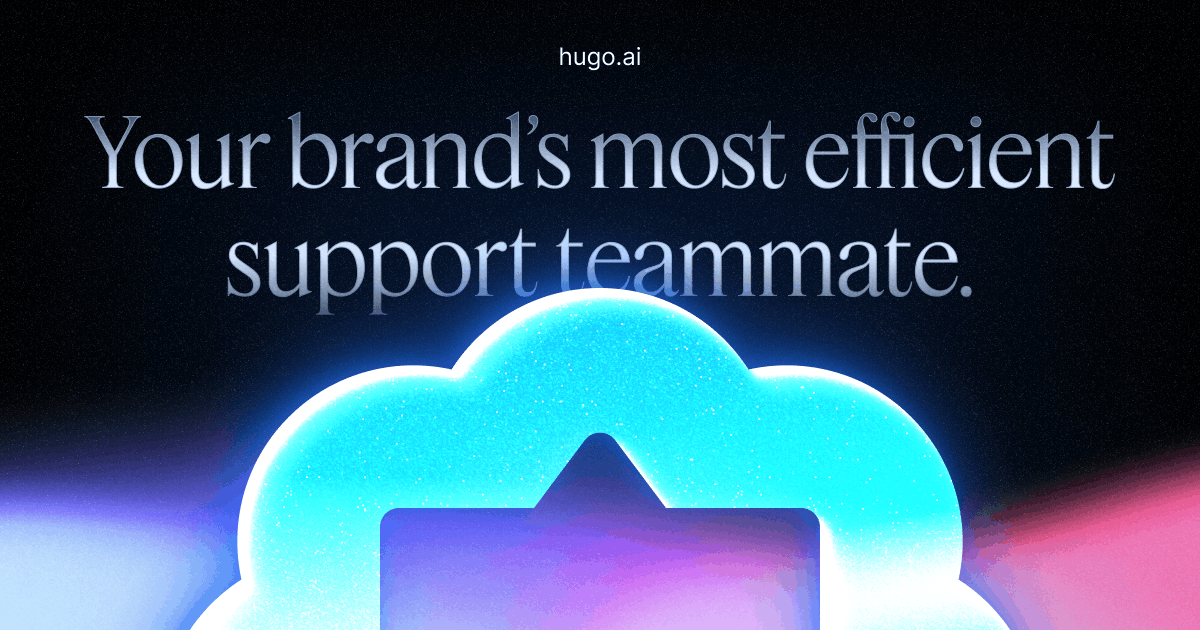
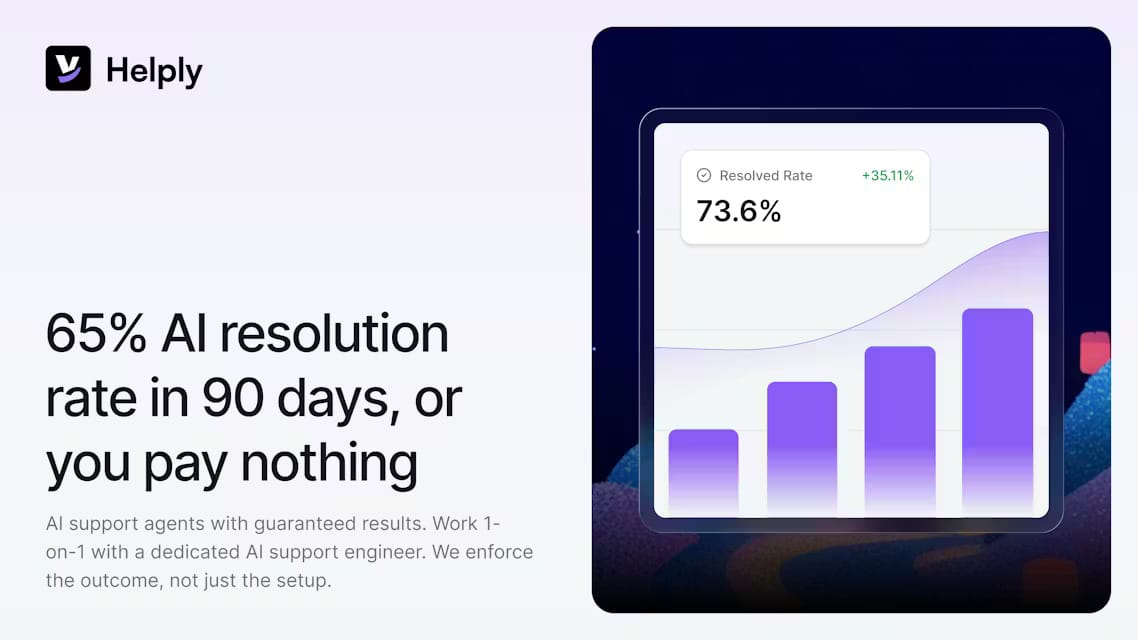
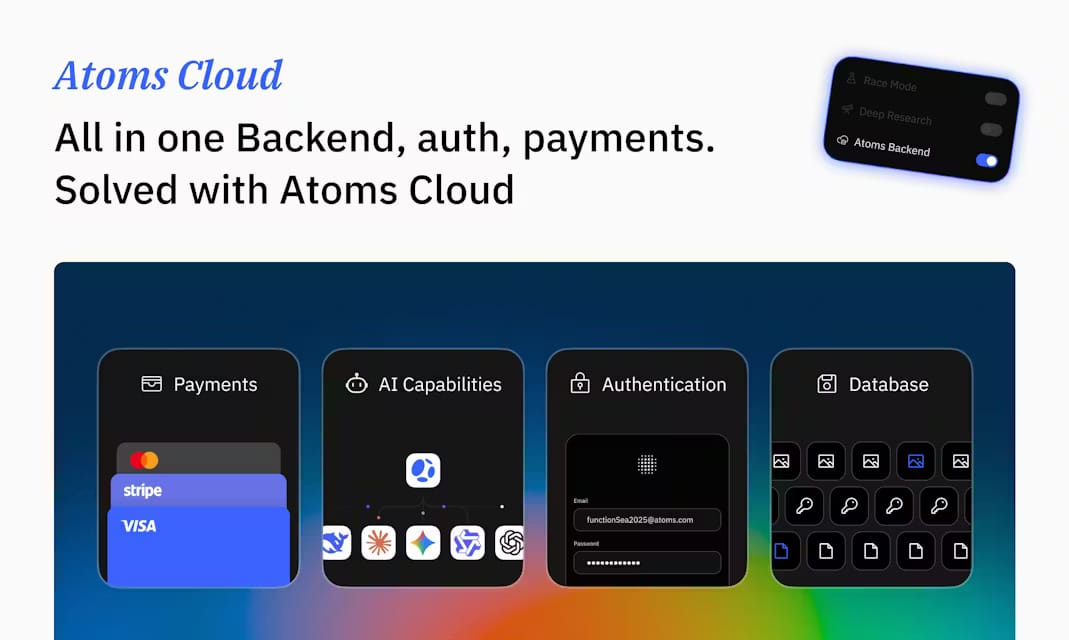
5 new AI-powered tools from around the web


arXiv is a free online library where researchers share pre-publication papers.

Thank you for reading today’s edition.

Your feedback is valuable. Respond to this email and tell us how you think we could add more value to this newsletter.
Interested in reaching smart readers like you? To become an AI Breakfast sponsor, reply to this email or DM us on 𝕏!
