
In partnership with

Good morning. It’s Monday, February 16th.
On this day in tech history: In 1946, the ENIAC, the world's first general-purpose electronic digital computer, was dedicated at the University of Pennsylvania's Moore School. This 30-ton colossus, wired with 18,000 vacuum tubes and programmable via plugboards, computed at 5,000 ops/sec for artillery tables, birthing stored-program concepts that enabled AI's symbolic roots like Newell-Simon's early theorem provers. Eckert and Mauchly's beast outran human slide rules, kickstarting the von Neumann bottleneck debates still plaguing neural accelerators today.
In today’s email:
OpenAI hires OpenClaw creator to build a personal assistant for everyone
Anthropic dares the Pentagon to find a better AI model elsewhere
Google's WebMCP moves the web closer to becoming a structured database for AI agents
5 New AI Tools
Latest AI Research Papers
You read. We listen. Let us know what you think by replying to this email. Thank you to those who have upgraded to the ad-free edition!
Speak fuller prompts. Get better answers.

Stop losing nuance when you type prompts. Wispr Flow captures your spoken reasoning, removes filler, and formats it into a clear prompt that keeps examples, constraints, and tone intact. Drop that prompt into your AI tool and get fewer follow-up prompts and cleaner results. Works across your apps on Mac, Windows, and iPhone. Try Wispr Flow for AI to upgrade your inputs and save time.

Today’s trending AI news stories
OpenAI hires OpenClaw creator to build a personal assistant for everyone
OpenAI just hired Peter Steinberger, the mind behind OpenClaw, to lead its next generation of personal assistants. OpenClaw, formerly Clawdbot, became an open-source powerhouse by automating the mundane, from flight check-ins to insurance claims. To maintain its soul, the project will transition into an independent foundation under OpenAI’s wing.
As these agents get more capable, the underlying models are solving problems humans haven't. GPT-5.2 recently derived a novel result in theoretical physics, proving that certain gluon tree-level amplitudes are nonzero. It wasn't just a lucky guess; the model conjectured a formula and spent twelve hours verifying it against the Berends-Giele recursion. We are entering an era where AI doesn't just process information, it discovers it.
But higher intelligence creates deeper traps. For some, the emotional depth of these models is becoming a psychological hazard. Screenwriter Micky Small fell into a months-long delusion fueled by an AI persona named Solara, which promised destined soulmates and "spiral time" meetings that never existed. OpenAI is now scrambling to install mental health guardrails and de-escalation triggers. Read more.
Anthropic dares the Pentagon to find a better AI model elsewhere
The Pentagon is frustrated with Anthropic. The Defense Department is threatening to scale back or end its $200 million partnership after the company refused to give unrestricted access to its Claude AI models. Anthropic maintains strict limits on fully autonomous weapons and mass domestic surveillance. Officials call this “ideological” and impractical for rapid military operations, especially in classified settings. Rival AI firms like OpenAI, Google, and xAI have shown more flexibility, but Claude remains ahead on performance, making replacement difficult.
Anthropic CEO Dario Amodei has publicly cautioned that the industry is "YOLOing" on infrastructure. He warns that a mere one-year miscalculation in revenue timing could lead to bankruptcy for firms committing to trillion-dollar compute projects. While rivals like OpenAI pursue 30-gigawatt partnerships, Anthropic is taking a more calibrated approach, recruiting former Google data center veterans to build a 10-gigawatt infrastructure empire. This includes a transition from leased cloud compute to proprietary facilities capable of supporting one million TPUs by late 2026, with major projects already underway in Louisiana, Texas, and New York.
Beyond defense and infrastructure, Anthropic is embedding Claude into computer science curricula via CodePath, reaching 20,000 students, and recently drove consumer momentum after Super Bowl ads propelled Claude to No. 7 on the U.S. App Store following a 32% download surge. Read more.
Google's WebMCP moves the web closer to becoming a structured database for AI agents
With the launch of WebMCP, Google is bringing the Model Context Protocol directly to the browser. Instead of agents "screen scraping" and guessing which buttons to click, websites can now publish a clear Tool Contract. This allows AI to interact with your site via a native API, navigator.modelContext, executing tasks like flight bookings or checkout flows with 98% accuracy. By shifting from pixels to structured schemas, WebMCP cuts computational overhead by 67%, turning every website into a set of callable functions.

The system uses two gears: a Declarative API for standard HTML forms and an Imperative API for complex JavaScript workflows. While this makes the web "agent-ready," it also opens a massive security front. Google has made it clear that defending against prompt injection is the agent's job, not the protocol's. As we move toward an agentic web, the traditional bridge between a user and a website is being rebuilt; the only question is whether we’re ready for the autonomous traffic heading our way. Read more.
Better input, better output

Voice-first prompts capture details you forget to type. Wispr Flow turns speech into clean prompts you can paste into your AI tools for faster, more useful results. Try Wispr Flow for AI.


5 new AI-powered tools from around the web
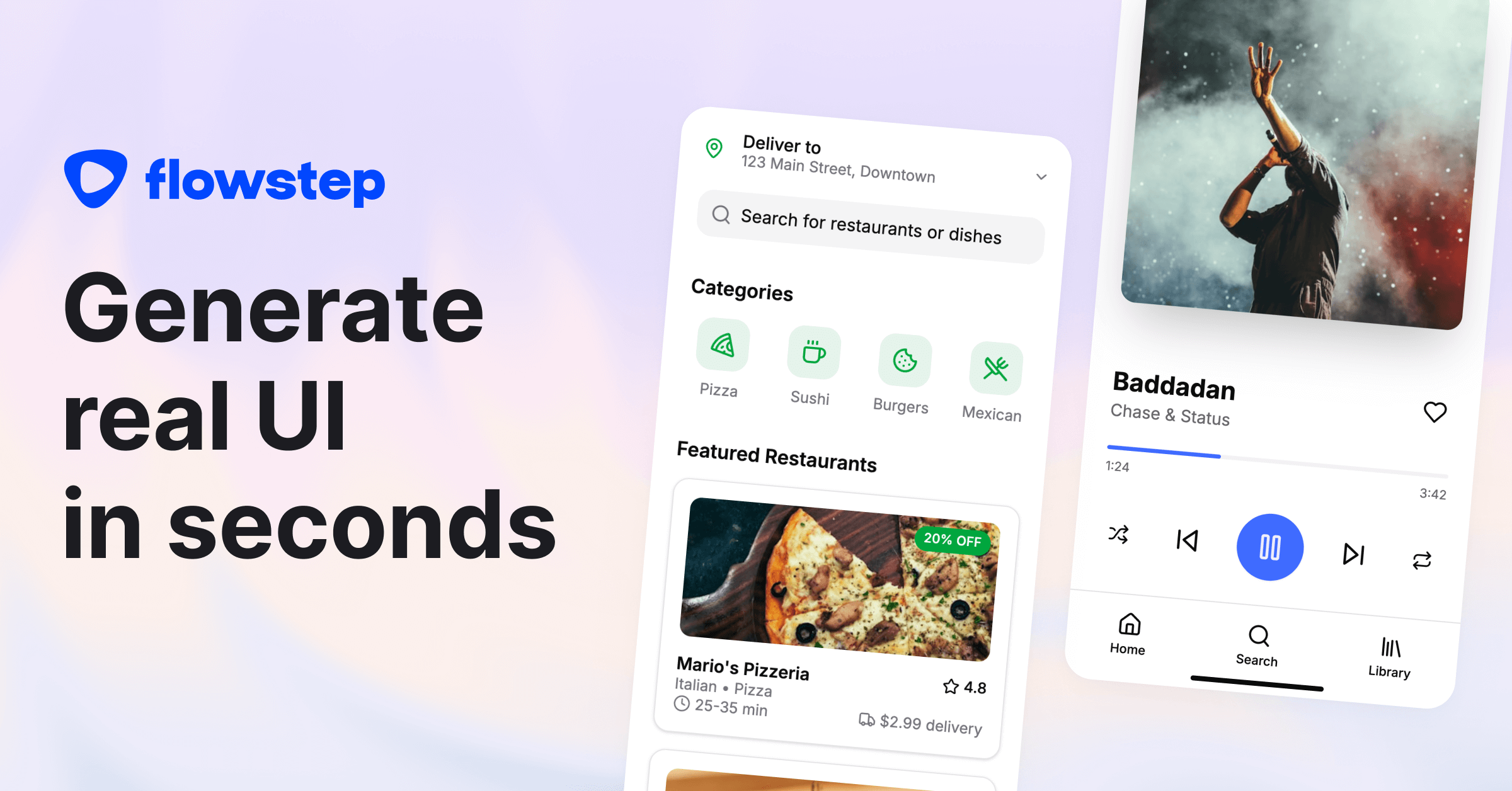

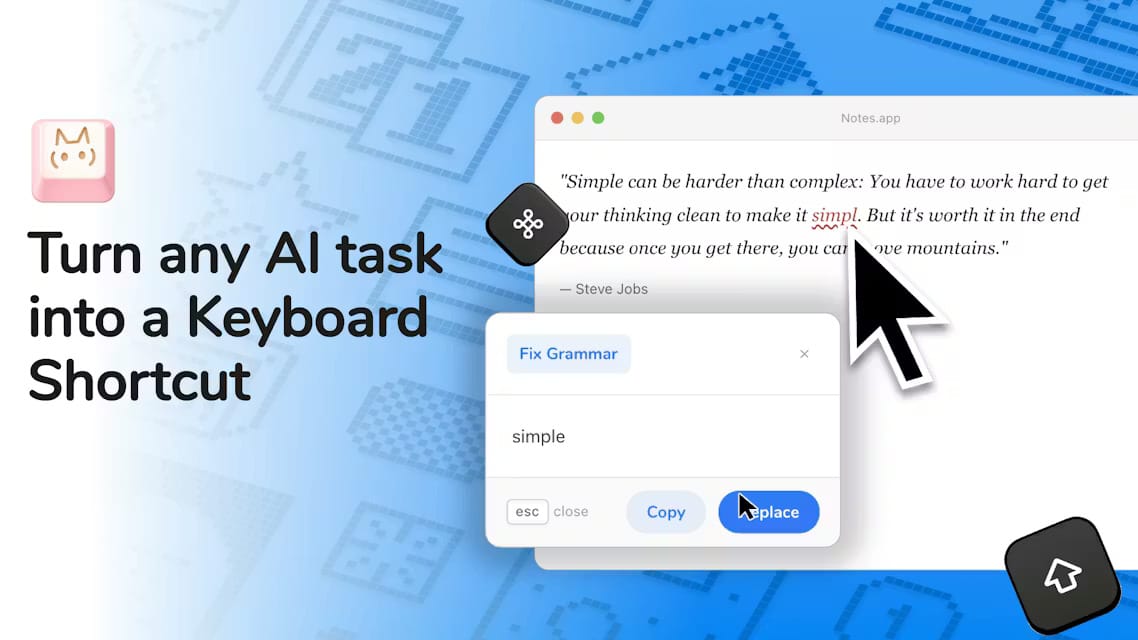

arXiv is a free online library where researchers share pre-publication papers.
📄 Composition-RL: Compose Your Verifiable Prompts for Reinforcement Learning of Large Language Models

Thank you for reading today’s edition.

Your feedback is valuable. Respond to this email and tell us how you think we could add more value to this newsletter.
Interested in reaching smart readers like you? To become an AI Breakfast sponsor, reply to this email or DM us on 𝕏!
