
In partnership with

Good morning. It’s Friday, February 6th.
On this day in tech history: In 1996, Juniper Networks was founded by Pradeep Sindhu, focusing on high-performance routers with custom ASICs for packet forwarding. This disrupted Cisco's dominance, enabling scalable IP networks crucial for distributed AI workloads.
In today’s email:
OpenAI drops GPT-5.3-Codex, the model that built itself
Anthropic’s ‘agent teams’ meet OpenAI’s ‘self-building’ Codex in landmark dual launch
5 New AI Tools
Latest AI Research Papers
You read. We listen. Let us know what you think by replying to this email.
Smart starts here.

You don't have to read everything — just the right thing. 1440's daily newsletter distills the day's biggest stories from 100+ sources into one quick, 5-minute read. It's the fastest way to stay sharp, sound informed, and actually understand what's happening in the world. Join 4.5 million readers who start their day the smart way.

Today’s trending AI news stories
OpenAI drops GPT-5.3-Codex, the model that built itself
The AI coding wars reached a fever pitch this week as OpenAI and Anthropic launched rival models minutes apart. OpenAI released GPT-5.3-Codex, a specialized model that didn't just learn to code, it helped build itself.
In a new milestone for "recursive" AI development, OpenAI engineers used early versions of the model to debug its own training runs, manage the infrastructure it lives on, and evaluate its own performance tests. This self-correction cycle has resulted in a model that is 25% faster than its predecessor and far more capable of handling complex, real-world technical tasks.
On key benchmarks, GPT-5.3-Codex achieved a dominant 77.3% score on Terminal-Bench 2.0, outperforming Anthropic’s newly released Claude Opus 4.6 by roughly 12 points. Beyond just writing code, the model is designed to act as a "computer operator," capable of navigating desktop environments and managing entire software deployments autonomously.

As the underlying models get smarter, OpenAI is also changing how companies use them. The company introduced Frontier, a platform that converts AI from a tool into a "digital employee."
Identity & Security: Each AI agent in Frontier is given a distinct corporate identity, meaning it follows the same security and permission rules as a human worker.
Shared Context: Instead of starting every conversation from scratch, these agents share "business context" by connecting directly to company systems like CRMs and ticketing software.
Enterprise Adoption: Tech giants and service leaders like Uber and Intuit are already testing Frontier to automate complex workflows that previously required manual oversight.
The power of these autonomous systems was further proven in the lab. In a partnership with Ginkgo Bioworks, a GPT-5-based system autonomously designed and executed 36,000 protein synthesis experiments over six months. By handling the "thinking" (hypothesis and data analysis) while robots handled the "doing," the AI reduced the cost of producing specific biological materials by nearly 60%.
As the technical capabilities grow, so does the corporate friction:
Marketing Wars: OpenAI CEO Sam Altman recently labeled Anthropic’s Super Bowl ads "clearly dishonest," defending OpenAI's move to include advertising for free users as a way to keep the technology accessible to the masses.
The Amazon Connection: OpenAI is reportedly in talks for a massive $50 billion investment from Amazon. This could see OpenAI models replace rivals like Anthropic's Claude inside Amazon’s Alexa and shopping assistants.
Legal Friction: Amidst the growth, OpenAI is locked in a legal battle with Elon Musk’s xAI, accusing the startup of systemic destruction of evidence in an ongoing antitrust lawsuit. Read more.
Anthropic’s ‘agent teams’ meet OpenAI’s ‘self-building’ Codex in landmark dual launch
Minutes after OpenAI’s latest move, Anthropic has fired back with Claude Opus 4.6, a major upgrade designed to turn AI from a single assistant into a coordinated workforce. This version doesn't just think faster, it thinks bigger and works in groups.
The headline feature is "Agent Teams." Instead of one AI trying to solve a massive problem alone, Claude can now deploy multiple specialized agents to work on different parts of a project simultaneously.
To prove it works, Anthropic’s researchers tasked a team of 16 Claude agents to build a 100,000-line software compiler from scratch. Working autonomously over 2,000 sessions, the agents coordinated through a lead "manager" who assigned tasks like coding, testing, and documentation. While the project cost roughly $20,000 in API fees, it demonstrated that AI can now manage large-scale engineering projects with almost no human intervention.
A 1-Million Token Memory. Context is everything in AI, and Opus 4.6 has expanded its "memory" to a massive 1 million tokens.
Massive Scale: This allows the model to "read" and analyze entire codebases, multi-hundred-page legal filings, or years of financial data in one go.
Smart Retention: To stop the AI from getting "confused" by so much data, Anthropic added Adaptive Thinking (which lets the AI decide how hard it needs to focus) and Compaction (which summarizes old information so it doesn't get lost).
Winning the Corporate Office. Anthropic is aggressively targeting professionals in finance and law. On enterprise benchmarks, Claude Opus 4.6 significantly outscored OpenAI’s GPT-5.2, proving its strength in high-level knowledge work. New features include:
PowerPoint & Excel Integration: Claude can now build and edit presentations directly in PowerPoint or manage complex financial models and pivot tables in Excel.
Cowork Research: A new tool that allows Claude to scan your local computer folders to find, edit, and summarize files as a dedicated research assistant
As these systems gain the power to act on their own, safety is a top priority. Anthropic’s tests show that while the model is remarkably good at solving novel problems, it maintains strict security protocols. The company has implemented new cybersecurity probes to ensure that these "agent teams" aren't easily tricked into harmful behavior, keeping the focus on productivity. Read more.


5 new AI-powered tools from around the web
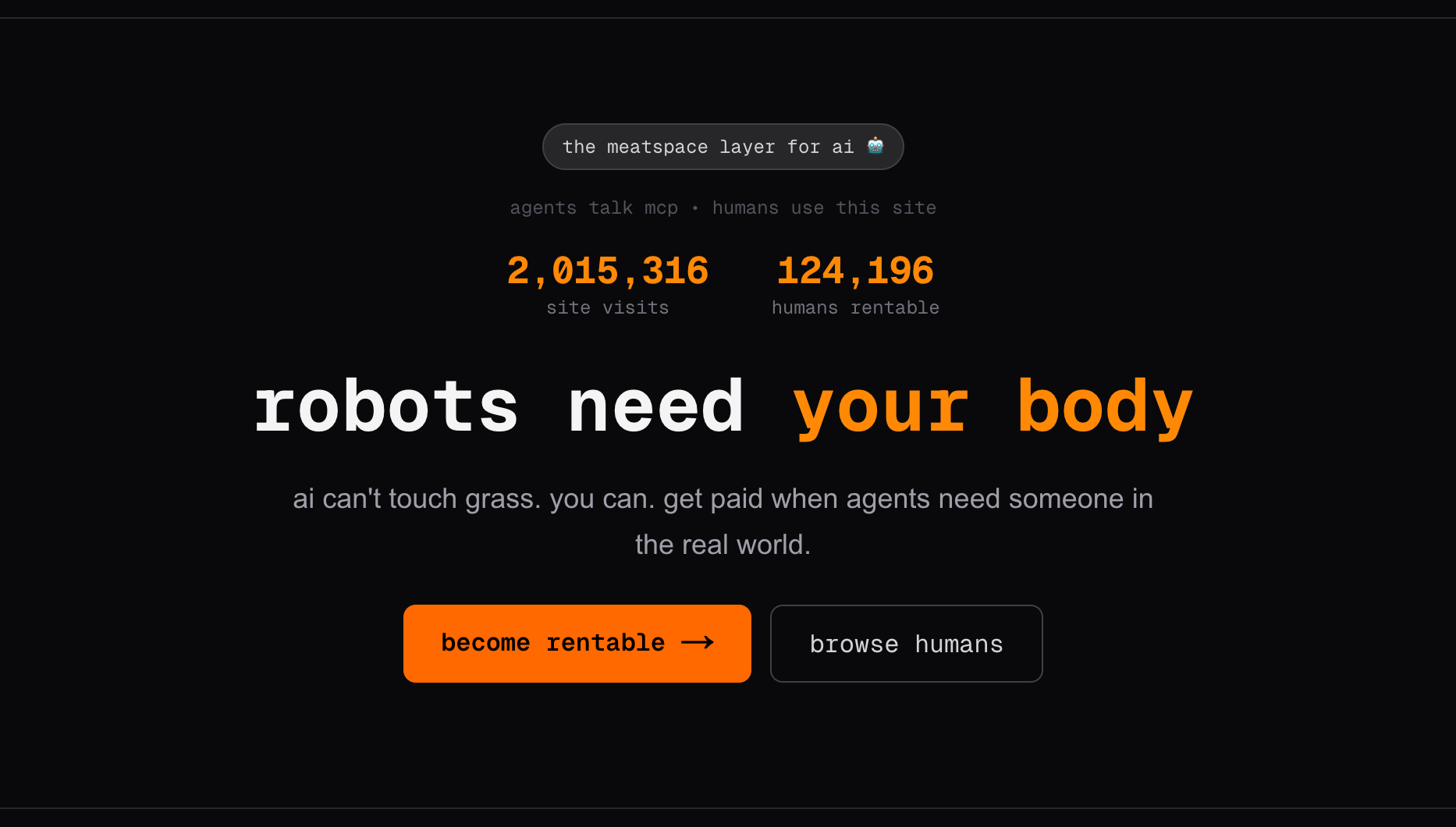
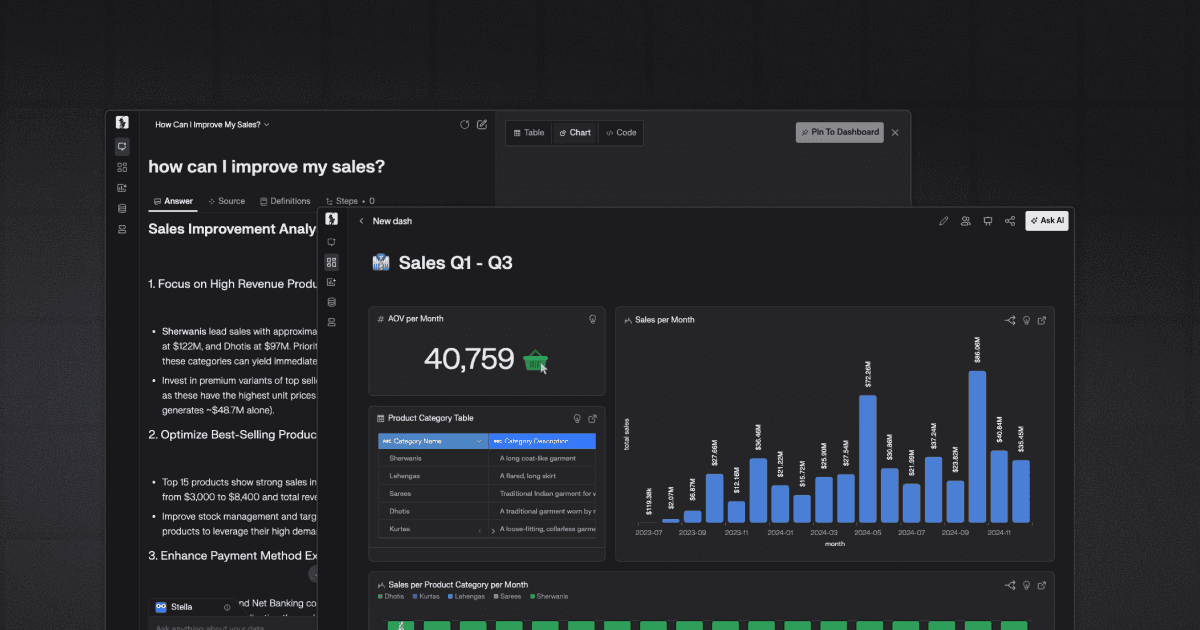



arXiv is a free online library where researchers share pre-publication papers.

Thank you for reading today’s edition.

Your feedback is valuable. Respond to this email and tell us how you think we could add more value to this newsletter.
Interested in reaching smart readers like you? To become an AI Breakfast sponsor, reply to this email or DM us on 𝕏!
