
In partnership with

Good morning. It’s Friday, February 13th.
On this day in tech history: On February 13, 1990, Apple Inc. sued Microsoft, arguing that Windows 2.0 had copied the “look and feel” of the Macintosh System Software. It was the moment the GUI wars turned from product competition into a legal battle over whether interface design itself could be owned. When most of Apple’s claims were rejected years later, it quietly cemented the rules that let modern software borrow, remix, and evolve instead of locking visual computing behind a single company’s walls.
In today’s email:
ByteDance’s Seedance 2.0 is chasing Sora with a new multimodal video generator
Velocity over volume: OpenAI launches real-time GPT-5.3-Codex-Spark
Elon Musk restructures xAI for an interplanetary agentic future
5 New AI Tools
Latest AI Research Papers
You read. We listen. Let us know what you think by replying to this email.
If you read AI Breakfast for signal, not banners, upgrade to the ad-free edition.
The CRM that saves teams hours every week

It's not about working harder — it's about having a CRM that actually thinks ahead. HubSpot Smart CRM learns how your team operates and adapts to make everyone more effective. Streamline day to day tasks and track the activity that actually matters to your business. The result? Your team gets back hours every week to spend on growth instead of admin work. Start free. See the difference.

Today’s trending AI news stories
ByteDance’s Seedance 2.0 is chasing Sora with a new multimodal video generator
The digital creator economy is hitting a point where video production is no longer about the gear you own, but the inputs you choose. ByteDance just released Seedance 2.0, a multimodal video generator that moves past simple text prompts to a more sophisticated "anchor" system. By feeding the model up to nine images and multiple audio or video clips, users can ground their generations in specific styles and sounds.
The technical jump here is in the physics. Seedance 2.0 can generate 15-second clips that respect real-world laws, handling high-difficulty movements like synchronized figure skating with precise landings. It handles complex camera paths, motion effects, and even follows text-based storyboards for cinematic control. It is currently live on ByteDance’s Dreamina platform, putting it in direct competition with OpenAI’s Sora 2 and Google’s Veo 3.
While the fidelity is high, the guardrails are low. Early users are already churning out deepfakes of Hollywood actors and protected anime franchises, highlighting a massive gap in copyright protection. Read more.
Velocity over volume: OpenAI launches real-time GPT-5.3-Codex-Spark
The AI landscape is splitting into two worlds: ultra-fast tools for creators and deep integration for the state. OpenAI’s new GPT-5.3-Codex-Spark is the tip of the spear for the former. It’s a lightweight model built for "flow state" coding, prioritizing raw speed over deep reasoning. Running on Cerebras’ Wafer Scale Engine 3, a single chip with four trillion transistors, Spark cranks out over 1,000 tokens per second.
This 128k context window responds instantly. OpenAI gutted the inference stack, cutting roundtrip overhead by 80% and halving the time-to-first-token. The trade-off is precision. Spark hits 58.4% on Terminal-Bench 2.0, well below the full Codex’s 77.3%. It’s a surgical tool for rapid iteration, not a replacement for high-horizon logic.
While the tech accelerates, the safety guardrails are being decentralized. OpenAI has dissolved its Mission Alignment team, moving members into other departments. Former lead Josh Achiam is shifting to a "Chief Futurist" role to forecast long-term post-AGI scenarios.
Practical deployments continue. A version of ChatGPT now runs in the Pentagon’s GenAI.mil platform for 3 million personnel, supporting unclassified tasks like summarizing regulations and procurement planning. Public Citizen warns looser controls could risk exposing sensitive info if extended to classified networks.
On the consumer side, GPT-5.2 Instant, the model behind free ChatGPT, received updates improving clarity, tone, and prioritization without adding latency.
However, the move toward commercialization is creating internal friction. Researcher Zoë Hitzig recently resigned in protest over OpenAI’s shift toward an advertising-driven business model for ChatGPT. The concern is that ad incentives could compromise privacy guardrails and exploit sensitive user data as the company nears a potential IPO. Read more.
Elon Musk restructures xAI for an interplanetary agentic future
Elon Musk has dismantled the original xAI research lab to build a four-pillar industrial giant. In a recent all-hands meeting following the SpaceX merger, Musk revealed a radical reorganization into core units: Grok (chat and voice), Grok Code, Imagine (video/image), and Macrohard.
Led by former DeepMind engineer Toby Pohlen, Macrohard is a direct shot at Microsoft, aiming to simulate entire business workflows and automate white-collar work. The ambitions are no longer just digital; Musk plans to build a lunar satellite factory and use electromagnetic mass drivers to launch terawatt-scale AI infrastructure into orbit.
The pivot has come at a high human cost. Half of the founding team, including co-founders Tony Wu and Jimmy Ba, have resigned this week. Musk framed the exits as a necessary evolution for a company burning $1 billion monthly.
On the product front, xAI is launching standalone apps: XChat for messaging and multi-user video calls, and XMoney for financial transactions. Closed beta testing is underway, with public rollout expected in the coming months. Read more.


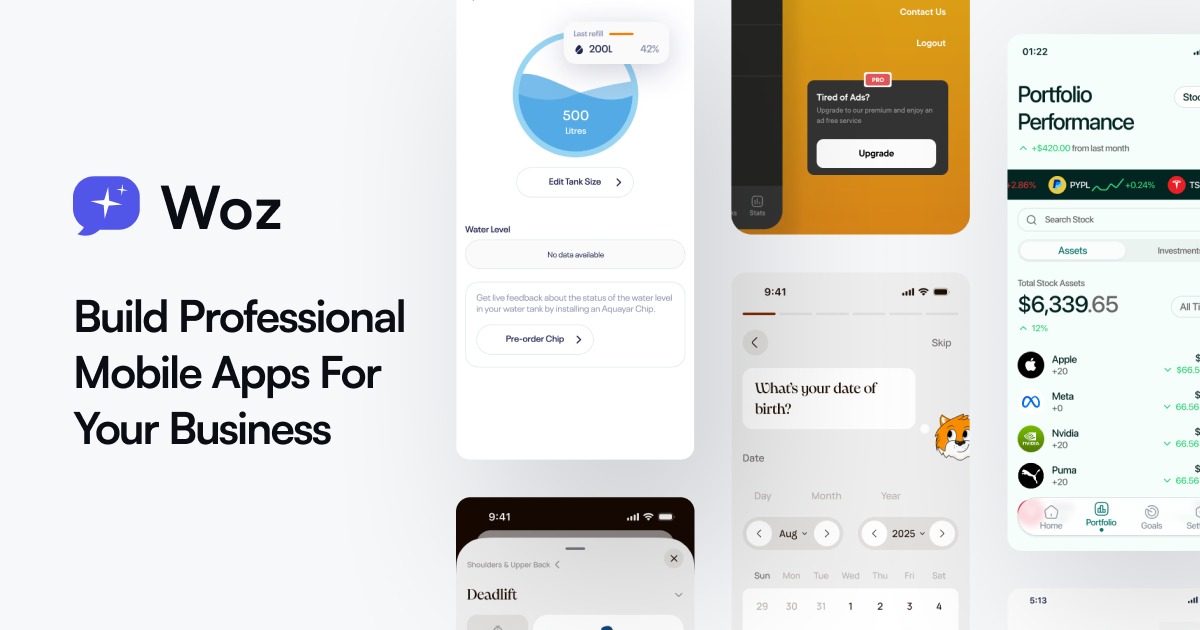
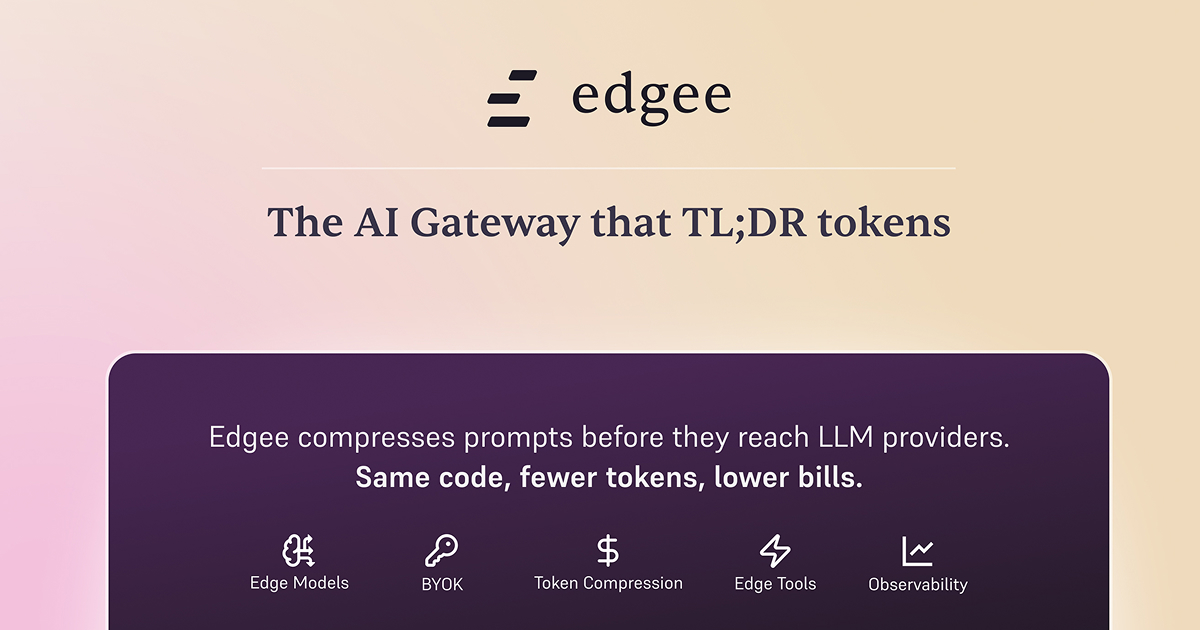
5 new AI-powered tools from around the web
.png)


arXiv is a free online library where researchers share pre-publication papers.

Thank you for reading today’s edition.

Your feedback is valuable. Respond to this email and tell us how you think we could add more value to this newsletter.
Interested in reaching smart readers like you? To become an AI Breakfast sponsor, reply to this email or DM us on 𝕏!
